
How to Find an Affordable Short-Term Rental as a Digital Nomad
The Unicorn of Rentals
More people are working from anywhere these days, but the short-term rental market hasn’t really caught up with us nomads and slomads. Finding something for a week or two of vacation is easy enough, but paying vacation rates on a monthly basis is not sustainable. And those incredible deals you hear about from influencers? I have yet to find them — at least not in a place I was actually willing to stay in. Those tend to be for people locking in six months to a year. But the affordable one-to-three month apartment? That’s the unicorn of rentals.
So as someone who’s been doing this across multiple countries for more than a year now, here’s what I’ve learned about finding affordable short-term rentals.
Let’s Be Honest About the Budget Thing
If you have loads of money, this is simple. You pull up Airbnb or VRBO, filter for something that won’t drain your account, and you’re done. I, however, do not have that budget. Think backpacker budget with champagne tastes.
You might expect the affordable-short-term-rental struggle in places like France or Japan. But I’ve found it to be just as real in Ecuador, Mexico, and Vietnam. Spoiler: it’s everywhere.
(And yes, I’m fully aware of how short-term rentals contribute to gentrification and price locals out of their own neighborhoods — but that’s a story for another day.)

Know Your Non-Negotiables First
Before you start searching, get honest with yourself about what you actually need versus what would just be nice to have.
I’ve been called a Bougie Hippie, and I’m owning it. I’m not looking for grand oceanside villas, but I’ve discovered that I’m only treehouse-chic in fantasy. At a minimum, I need a kitchen, some way to regulate temperature (e.g., A/C, fan, heater, llama blankets), reliable high-speed WiFi, an elevator if it’s the 4th floor or higher [I have a bad knee and 3 pieces of luggage], and a washing machine (because a laundry service in Peru disappeared some of my clothes). I’d like a TV, a microwave, and a dedicated workspace, but I can live without them. Everything else is negotiable.
Knowing your baseline matters because it keeps you from either overspending on things you don’t care about or talking yourself into a place that’s going to make you miserable by day two.
Platform vs. Going Local
There are ways to find cheaper accommodations outside of the big booking platforms — Facebook Marketplace, walking neighborhoods and looking for rental signs, or even doing work exchanges. If you have the time and risk tolerance for those, I say go for it.
I tend to stick with booking platforms. I’m less likely to get scammed, and if something goes sideways (like ending up in a mold-ridden hellscape) there’s at least customer service to appeal to. For me, the peace of mind is worth the platform markup. You’ll have to decide where your own line is.
One platform worth knowing that most people overlook: CozyCozy.com. It’s a meta-search site that aggregates results from Airbnb, Booking.com, VRBO, and others in one place — which makes comparison shopping a lot faster.
Tips for Finding a Place That Won’t Make You Regret It
Photos: Look for What’s Missing
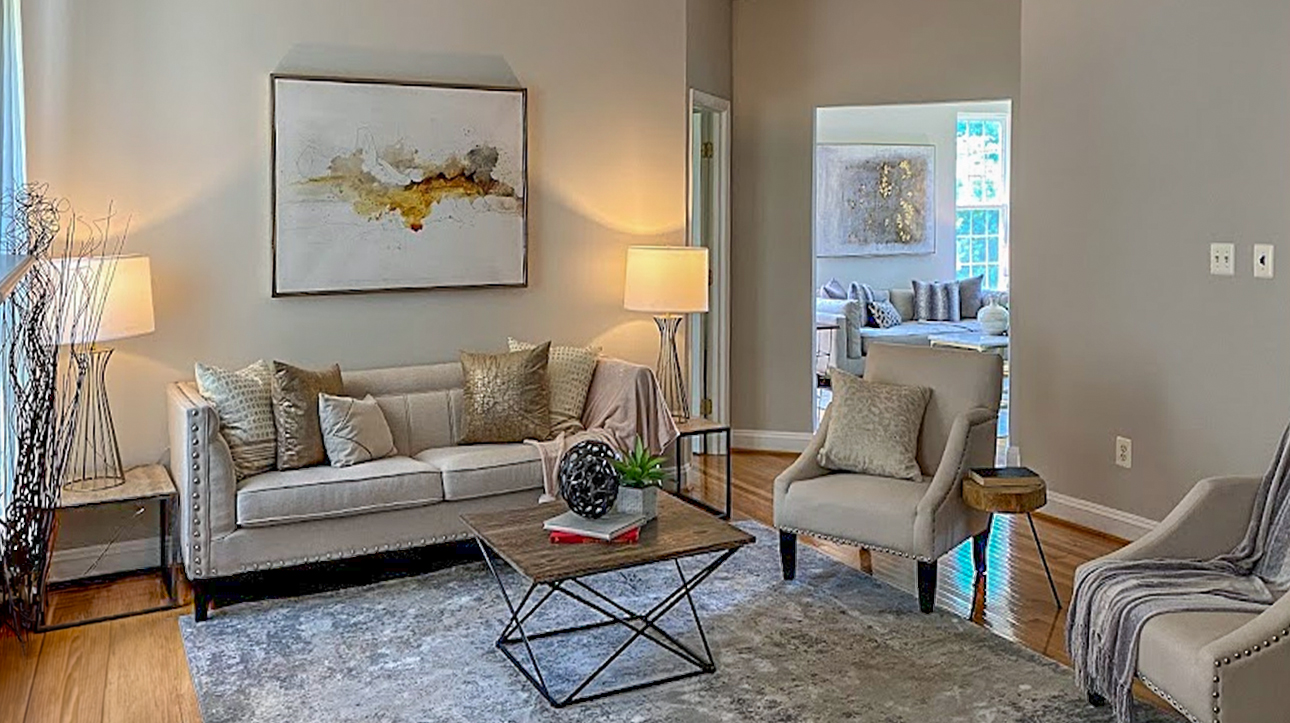
Good listings have lots of photos. But more importantly, look at what’s in them. Is there a dedicated workspace or just a short plastic chair near a coffee table? Does the kitchen actually have a stovetop and pots, or just a kettle? Is there a full-size or mini refrigerator? Is there a photo of the bathroom at all? (That last one is a deal breaker for me. I need to see the bathroom.)
Listings that show only the prettiest corners of a place while strategically avoiding everything else are telling you something. Also, beware of photos that look too perfect as they may be AI-enhanced and not reflect reality. Photos that are identical to another listing also make me nervous.
Reviews: Read Them Like a Detective
Guest reviews are a starting point, not the whole story. A place with 4.7 stars and 200 reviews is very different from one with 4.7 stars and 3 reviews. Read the actual comments, especially the negative and most recent ones. Look for patterns — one person mentioning noise might be a fluke; four people mentioning it is a warning.
Also pay attention to what people don’t say. If you’re nomading and WiFi is non-negotiable, and not a single review mentions it — ask for speed test results before you book.
📌 Remember, on some sites, guests are also trying to have a good rating and may not be as blunt as possible. Read between the lines.
Read the Listing Like a Lawyer
Read beyond the flowery language of how perfect the place is. Does it say no guests, no cooking fish, quiet hours after 9pm, an extra charge for electricity for stays of a certain length? These aren’t red flags on their own, but they need to match your lifestyle.
And while most platforms have gotten much better at showing final pricing upfront, still scroll to the full cost breakdown before booking — especially for longer stays where cleaning fees, service fees, and security deposits can add up meaningfully.
Check the Cancellation Policy
Especially for longer stays, this matters. A strict no-refund policy on a 90-day booking is a significant risk if your plans change, a visa falls through, or the place turns out to be nothing like the listing. Look for moderate or flexible cancellation terms, or at minimum understand exactly what you’re agreeing to before you hit confirm.
📌 Pro tip: You can make two separate bookings. One for a short period of time to test out the place. And the consecutive one for the rest of your stay. This strategy only works with bookings that you can cancel without penalty.
Message the Host Before You Book
This one is underused and genuinely valuable, but you can send a short message before booking. Introduce yourself briefly, mention how long you’re staying, and ask a specific question that matters to you (WiFi speed, water pressure, photos of the bathroom, whatever).
You learn two things: whether the host is responsive, and whether they communicate clearly. If it takes them three days to answer a pre-booking question, imagine what it’ll be like when something needs fixing. But know that this is just an indication of responsiveness. They can still be responsive to hook you, and ghost you if problems arise.
It also opens the door to negotiating a small discount for a longer stay, which hosts are sometimes willing to do if you ask nicely.

Horror Story!
Some sites, like Airbnb, let hosts put in a location that’s different than the actual location. If the location matters to you, message the host and confirm it before booking. Friends and I had a horrible experience in Greece when the place we booked was not where it was shown on the Airbnb map. Instead of being near the destination wedding we were there to attend, it was on the other side of the island. Not a good way to start a trip, I promise you. Customer service was less than helpful because there was a small mention of the real location hidden in the listing.
Bonus Tip
Use Google Maps as a Recon Tool
This is one of the most useful things I do before booking anywhere, and most people skip it entirely.
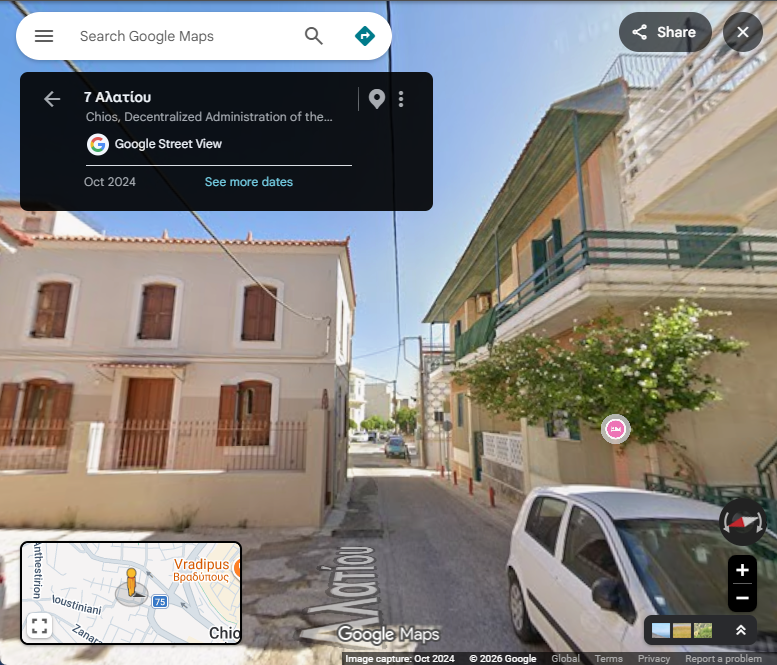
Take a Street View tour of the neighborhood. Walk the virtual streets around the listing and get a feel for what’s actually there — shops, restaurants, the general vibe. One caveat: try not to look at it through overly American-colored glasses. A neighborhood that looks sparse or rough by U.S. suburban standards might be perfectly safe and livable by local ones. But you also have to trust your gut and other research you’ve done on neighborhood safety.
One more thing — Street View photos aren’t always current. Check the date stamp in the bottom-left corner of the image when you’re in Street View mode. If the photos are five years old, a lot may have changed. Google sometimes has multiple dated captures of the same location, so you can compare.
Check distances to what actually matters to you. This sounds obvious, but it’s easy to miss. Drop a pin on the listing and measure the actual walking or transit distance to wherever you need to be regularly — a coworking space, a language school, a specific neighborhood, a grocery store. I learned this the hard way when I was taking a class in London and needed to be realistic about my daily commute time.
🚩Red Flags To Make You Pause
- Very few reviews, especially if they’re local reviews. It could be someone just getting started and their friends provided reviews. I might chance it for a short stay, but not for a month or longer.
- Photos that feel overly polished or AI-enhanced
- Photos are identical to another listing
- A host who doesn’t respond or takes days to reply to a pre-booking question
- Pricing that seems too good to be true for the area (sometimes it is; sometimes it’s a scam)
✨Final Thoughts and Tips
Finding a good one-to-three month rental at a reasonable price isn’t impossible — but it’s rarely as simple as opening an app and clicking on the prettiest option. You will definitely have to invest some extra time upfront. The tradeoff is that you avoid investing a lot of money in the wrong place.
The good news is that with the right filters, a detective’s eye for listings, reviews, and photos, and a willingness to actually communicate with your host before booking, you can find solid places. I’ve done it repeatedly across several countries and I promise it’s time well spent.
📝 How has it been going for other nomads/slomads hunting for 1- to 3-month rentals? Drop a comment. I’d love to hear what’s worked (or absolutely hasn’t).